Final Project - AirTrace
Team Members
Eden Chung, Saloni Jain
AirTrace
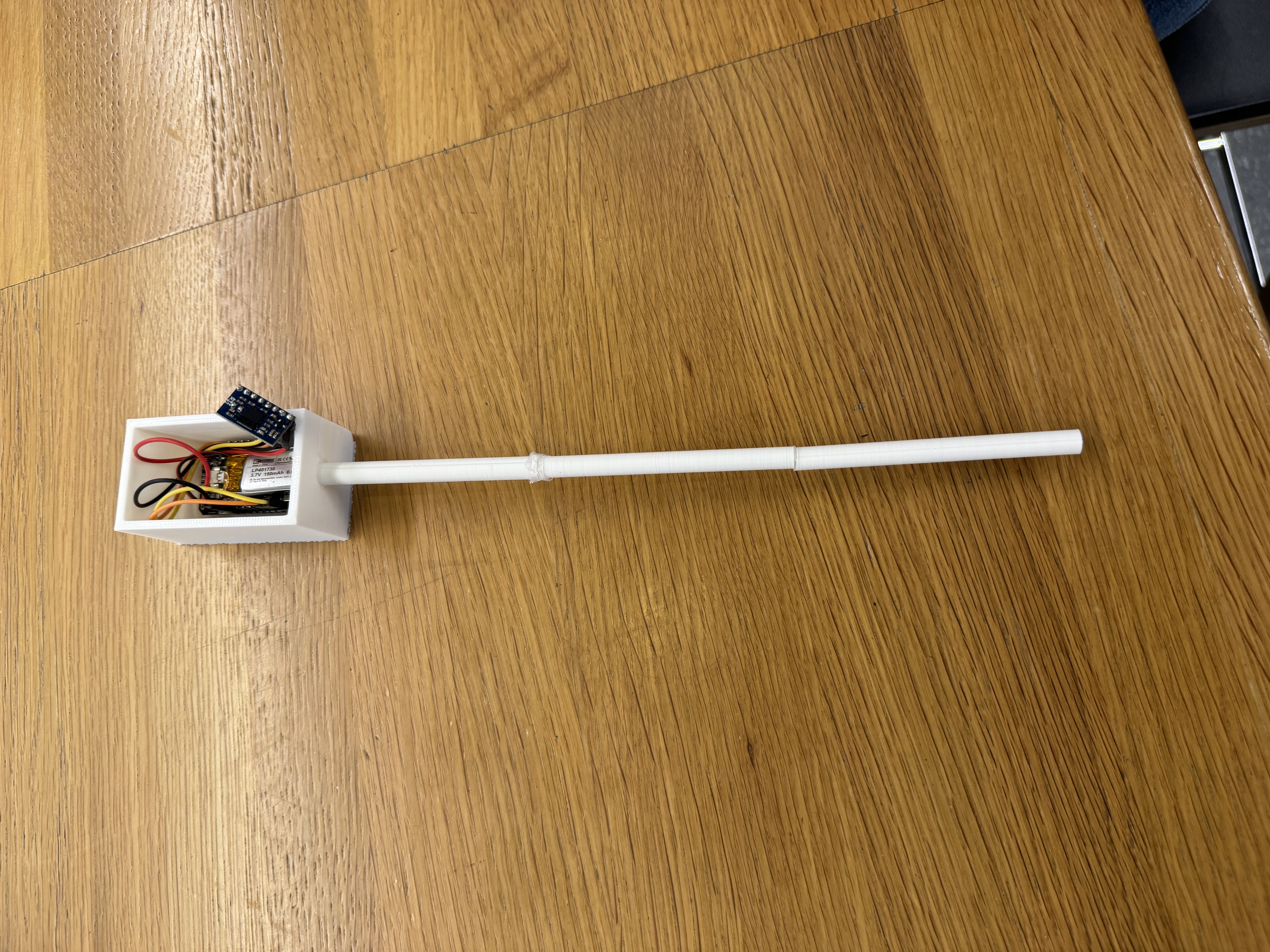
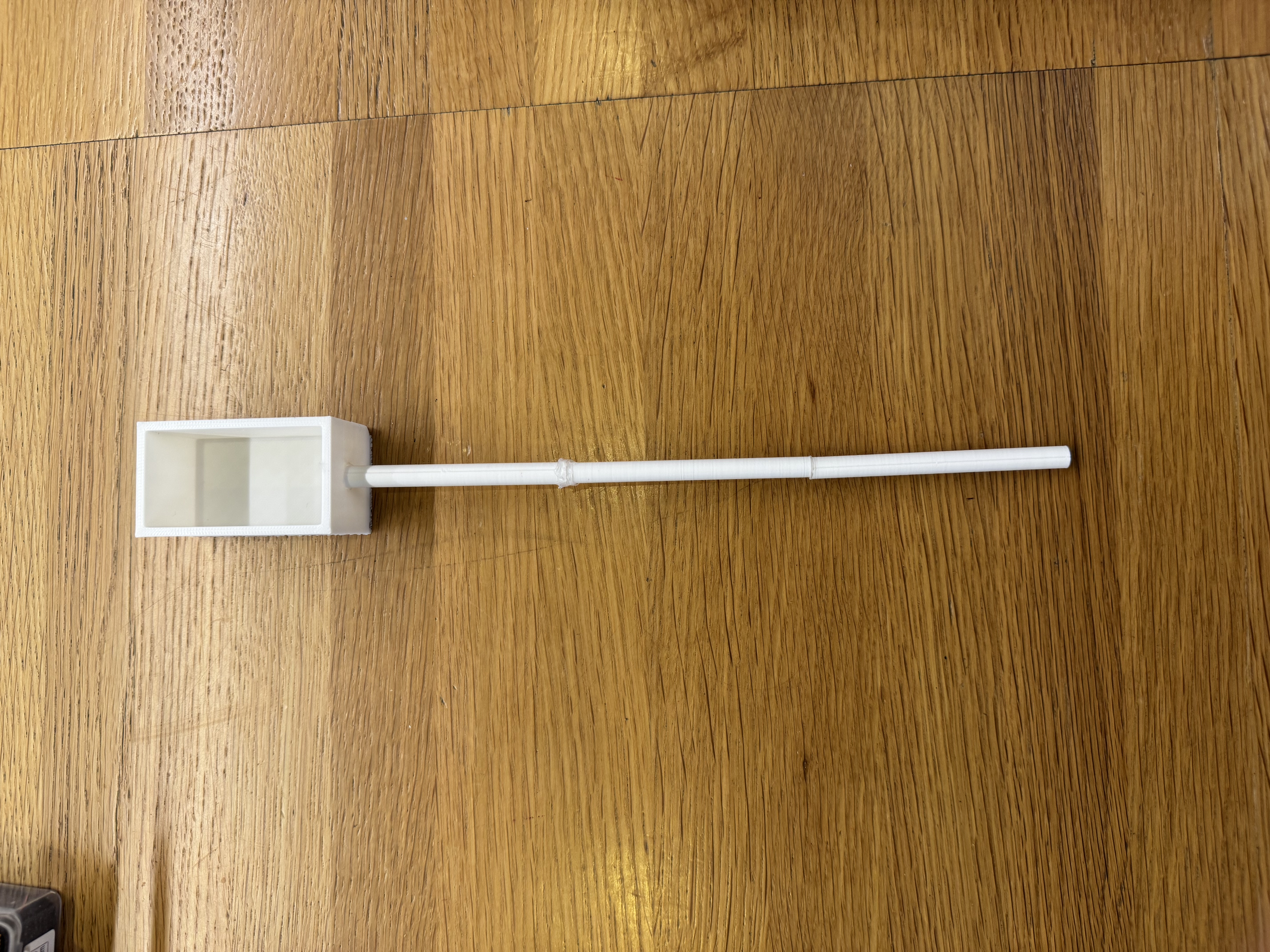
AirTrace is a motion-tracking air drawing wand inspired by the Disney MagicBand wand
Images
Video
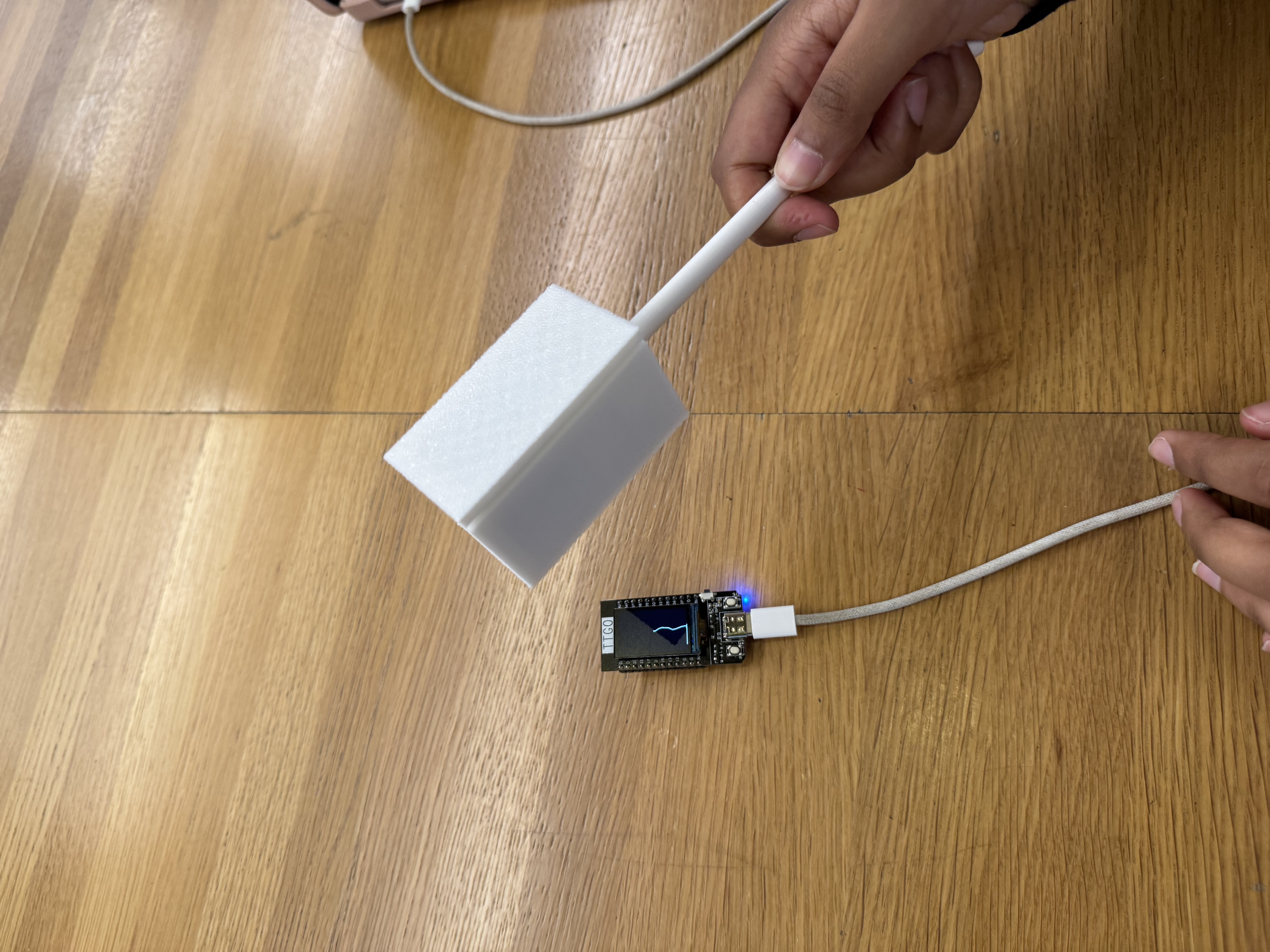
In the videos, you can see the use of the reset button (button on the right), as well as the "start drawing" button (button on the left)
Process
For our final project, we built a motion-tracking air drawing wand inspired by the Disney wand, where a user draws in the air and sees their strokes rendered in real time on a TFT display. The system uses an IMU to read acceleration data, integrates it into a position estimate on a sender ESP32, and transmits it wirelessly via ESP-NOW to a receiver ESP32 that handles rendering.
A significant part of my contribution in this 2 person team was the physical enclosure. Coming in with not much CAD experience, I learned to design in free software from scratch in Tinkercad, as well as learn how to use SCAD (creating CAD files programmatically) and went through multiple print iterations before landing on something that fit the hardware correctly. Learning to measure with calipers, adjust and iterate, and do targeted test prints rather than reprinting the whole enclosure each time was something I got better at over the course of the project.
The software presented its own set of challenges. Ultimately, it seemed that integrate acceleration to get velocity and integrate velocity to get position was not super accurate. The drawing would drift, respond to tilt instead of lateral movement, and produce an unwanted backswing after fast motions. We tried to adjust the code and make changes, but it seemed like to get better results, the integration may not have been the best result. If we had had more time, it could have been worth exploring a machine learning approach to render the image by using the raw data rather than double integrating.